Available Projects
17 Projects Computer Vision
📷 1 Photo
AI based face recognition system
An automated attendance management system that uses Computer Vision and Face Recognition to identify registered individuals and mark their attendance in real time. The system uses OpenCV, Haar Cascade Classifier, and LBPH (Local Binary Patterns Histograms) for face detection and recognition. It supports face registration, model training, live camera or image-based recognition, duplicate attendance prevention, and attendance report generation. Attendance records are managed using Python, Flask, Pandas, NumPy, and CSV-based data storage, with a user-friendly web interface.
 Deep Learning
📷 1 Photo
Brain tumor detection
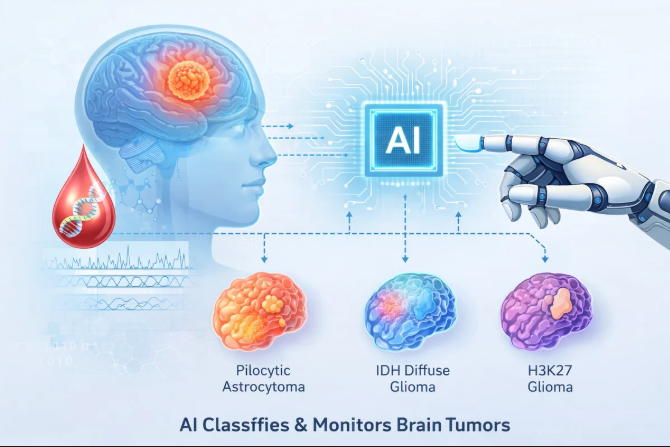
A Django-based medical image analysis application designed to detect and segment potential brain tumor regions from MRI scans. The system allows users to upload MRI images, perform image preprocessing and threshold-based segmentation, generate binary segmentation masks and visual overlays, and calculate segmented tumor area and percentage. It also provides dataset management, scan history, and analysis result visualization through a web interface.
 Artificial Intelligence
📷 1 Photo
Multimodal Emotion Recognition
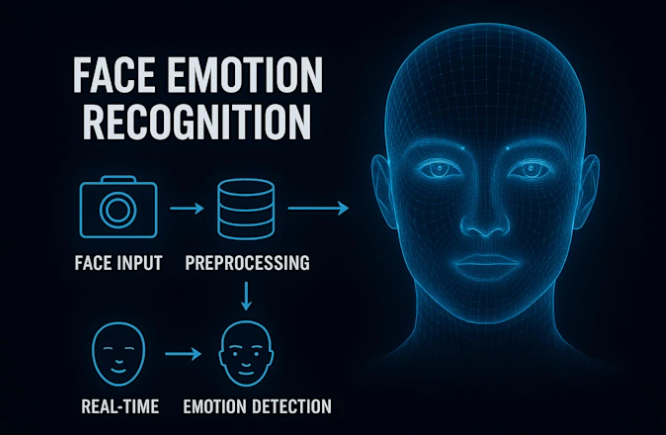
A Django-based AI application that analyzes human emotions through text, speech, and video inputs using pretrained deep learning models. The system integrates DistilRoBERTa for text emotion classification, Wav2Vec2 for speech emotion recognition, and Vision Transformer (ViT) for facial expression analysis. It combines predictions using confidence-weighted late fusion to generate an overall emotion estimate. The application also provides modality-wise confidence scores, result visualization, analysis history, and media upload management.
 Cyber Security
📷 1 Photo
Secure Colud Storage
A Django-based secure file storage and sharing application that protects uploaded files using AES-256-GCM authenticated encryption and role-based access control. The system implements envelope encryption with unique data encryption keys (DEKs) for individual files, email OTP-based two-factor authentication, and permission-based file sharing. It also supports temporary sharing links with expiry dates, download limits, access revocation, and security audit logging. The application ensures that files are encrypted before storage and decrypted only after successful user authentication and authorization.
 Cyber Security
📷 1 Photo
AI-Based Security Log Analysis and Automated Threa
A Django-based cybersecurity application that analyzes security log files to identify suspicious authentication activities and unusual network traffic using machine learning and rule-based detection techniques. The system detects potential brute-force attacks and password-spraying attempts through authentication log analysis, while applying the Isolation Forest algorithm for unsupervised network anomaly detection. It assigns threat severity levels, stores detected security events, and provides an interactive dashboard with visual analytics, threat statistics, and recent event monitoring.
 Cyber Security
📷 1 Photo
Zero-day anamoly detection
Zero-Day Attack Detection Using Anomaly Detection Algorithms is a Python-based cybersecurity project that identifies suspicious network traffic and unusual activity using machine learning techniques. The system analyzes network-flow data to detect potential unknown cyber threats by learning normal traffic patterns. It implements Isolation Forest, Local Outlier Factor (LOF), and One-Class SVM algorithms for anomaly detection. Users can upload CSV datasets or manually enter network traffic details to perform analysis. The application provides anomaly detection results, performance evaluation metrics, confusion matrices, ROC curves, and interactive visualizations through a user-friendly dashboard.
 Machine Learning
📷 1 Photo
Advanced Password Security
Advanced Password Strength Analyzer & Password Attack Detection is a Python-based cybersecurity application designed to evaluate password strength and identify suspicious authentication activities using machine learning. The system analyzes password length, character diversity, common password patterns, and estimated entropy to provide strength scores and improvement recommendations. It also uses a Random Forest Classifier to detect potential password attacks, including brute-force attempts and credential stuffing, based on authentication activity patterns. Users can upload CSV datasets or manually enter authentication details to analyze suspicious login behavior. The application provides attack predictions, model performance metrics, feature importance analysis, and interactive visualizations through a Streamlit dashboard.
 Cyber Security
📷 1 Photo
DDOS Detection
Intelligent DDoS Attack Detection and Mitigation is a machine learning-based cybersecurity application designed to identify potentially malicious network traffic and detect Distributed Denial of Service (DDoS) attacks. The system analyzes network-flow characteristics such as packet rates, flow duration, packet sizes, TCP flag counts, and data transfer rates using machine learning algorithms. It implements Random Forest and Extra Trees classifiers to distinguish between benign and suspicious network traffic. Users can upload network traffic datasets in CSV format or manually enter network-flow details for analysis. The application provides attack predictions, confidence scores, model evaluation metrics, feature importance analysis, and recommended defensive measures through an interactive Streamlit dashboard. It also supports batch traffic analysis and downloading classified results.
 Cyber Security
📷 1 Photo
AI-Powered Web Application Firewall (WAF)
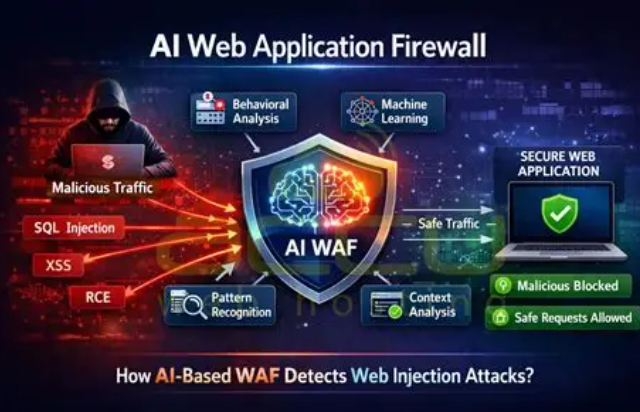
SentinelAI is an AI-assisted Web Application Firewall designed to inspect HTTP requests, identify potentially malicious web traffic, and provide security recommendations through an interactive Streamlit dashboard. The system analyzes request information such as source IP address, HTTP method, host, request path, user-agent, and request body to identify suspicious activities. It uses rule-based detection techniques to identify common web attacks, including SQL injection, Cross-Site Scripting (XSS), path traversal, command injection, and suspicious automation. A weighted risk-scoring mechanism classifies requests into three actions: ALLOW, REVIEW, or BLOCK. The application also supports optional Isolation Forest-based anomaly detection to identify unusual request patterns. Users can inspect individual HTTP requests, upload access-log datasets in CSV format, manually create datasets, view traffic logs, and analyze security events through interactive charts and dashboards. The system provides risk scores, threat categories, source IP analysis, and downloadable inspection logs to support web application security monitoring.
 Cyber Security
📷 1 Photo
Intelligent Phishing Detection System
machine learning-based cybersecurity application designed to detect and analyze phishing URLs and suspicious email messages. The system allows users to upload their own labeled phishing datasets in CSV format, train machine learning models, and classify URLs or email content as phishing or legitimate. The application provides multiple scanning interfaces, including a Quick Scan feature, dedicated URL Scanner, and Email Scanner. It analyzes suspicious patterns, extracts relevant security indicators, and calculates phishing probability and risk levels to help users identify potential cyber threats. It also includes an analytics dashboard featuring model evaluation metrics such as Accuracy, Precision, Recall, F1-score, ROC-AUC, confusion matrix, and ROC and Precision-Recall curves. Users can explore feature importance, review previous scans, and download individual scan reports in JSON format. The application is developed using Streamlit with interactive visualizations and a user-dataset-driven machine learning pipeline, making it suitable as an academic cybersecurity and machine learning project.
 Artificial Intelligence
📷 1 Photo
Code Analysis and Bug Detection System
The AI-Powered Python Code Review and Vulnerability Detection System is an intelligent software analysis application designed to automatically identify programming errors, potential security vulnerabilities, and code quality issues in Python applications. The system allows users to submit individual Python files or upload complete ZIP project archives for automated code analysis without executing the uploaded source code. It combines static code analysis techniques with AI-assisted code reviewing to detect suspicious coding patterns, programming mistakes, and potential security weaknesses. The application categorizes identified issues based on severity levels, including Critical, High, Medium, Low, and Informational, helping developers prioritize necessary code improvements. The system also provides an automated risk assessment summary, AI-generated review insights, and detailed findings for individual source files. Review results are stored in a database and can be retrieved through REST API endpoints. Users can also access historical reviews and generate downloadable reports in JSON and HTML formats. The application is developed using FastAPI and Python, providing a structured API-based architecture for automated code inspection, vulnerability identification, and intelligent software quality assessment.
 Data Science
📷 1 Photo
Automated Customer Support and Conversation Analyt
web-based intelligent customer support chatbot designed to automate responses to frequently asked customer queries and improve customer service efficiency. The system allows users to interact with a chatbot through a conversational interface to receive instant assistance regarding orders, payments, returns, shipping, and account-related issues. The application uses a knowledge-based question-matching mechanism to identify relevant customer queries and generate appropriate responses. It applies text normalization, keyword matching, and similarity scoring using Python's SequenceMatcher to identify the closest matching questions from a predefined knowledge base. Each response includes a category and confidence score to indicate the relevance of the matched answer. The system also provides knowledge base management functionality, allowing administrators to add new questions, answers, categories, and keywords dynamically. It maintains conversation history with session tracking and timestamps, enabling customer interactions to be recorded and analyzed. An analytics module provides insights into total queries, active chat sessions, and frequently requested support categories. The application is developed using Flask and Python, with JSON-based storage for knowledge base records and chat history. It provides REST API endpoints for chatbot communication, knowledge management, and customer interaction analytics.
 Deep Learning
📷 1 Photo
AI-Based Financial Market Forecasting and Risk Ass
The AI-Powered Stock Market Trend Prediction and Risk Analysis System is a machine learning-based financial analytics application designed to analyze historical stock market data, predict market direction, and evaluate potential investment risks. The system uses a Random Forest classification algorithm to categorize market movements into three classes: Up, Down, and Neutral. The application processes historical market indicators such as opening price, closing price, highest price, lowest price, trading volume, daily returns, volatility, RSI, MACD, volume changes, and moving average gaps to identify patterns and generate market predictions. It provides an interactive dashboard displaying historical stock price movements, market direction distribution, model performance, feature importance, confusion matrices, ROC curves, and volatility analysis. Users can upload their own labeled stock market datasets in CSV format or manually update training records through the application. The prediction module generates market direction predictions along with confidence percentages, class-wise probabilities, and risk scores categorized into Low, Moderate, and High levels. The system also evaluates model performance using Accuracy, Precision, Recall, F1-score, and ROC-AUC metrics. Developed using Python and Flask, the application integrates machine learning, financial data processing, and interactive visualization to provide an accessible platform for stock market trend analysis and risk assessment.
 Cyber Security
📷 1 Photo
Network Intrusion Detection System
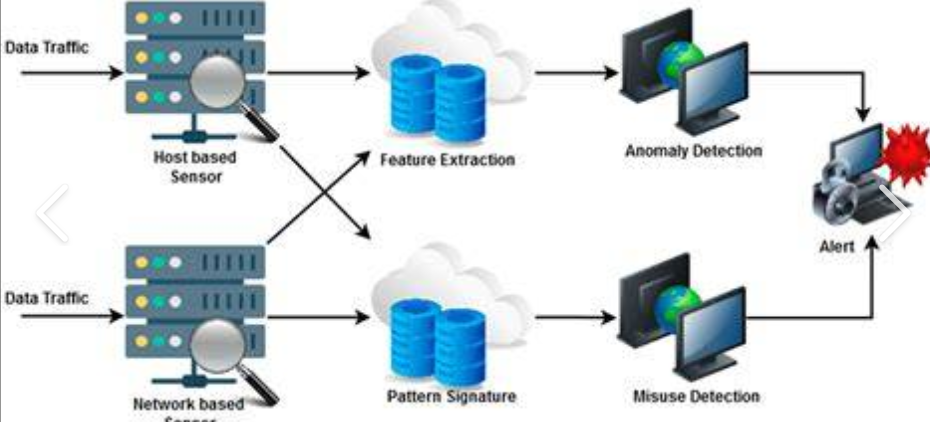
The Network Intrusion Detection System is a machine learning-based web application developed using Python and Flask to analyze network traffic and identify potential malicious activities. It uses a Random Forest Classification algorithm to classify network traffic into four categories: Normal, DoS, Probe, and Brute Force. The system analyzes network traffic features such as connection duration, source and destination bytes, packet count, protocol, service, failed login attempts, and SYN count. Users can upload their own network traffic datasets in CSV format or use the built-in demo dataset to train the machine learning model. It provides real-time classification of submitted network traffic records, along with prediction confidence and risk levels. The dashboard displays network traffic statistics, attack distribution, confusion matrix, feature importance, and traffic trends through interactive visualizations. Model performance is evaluated using accuracy, precision, recall, and F1-score.
 Deep Learning
📷 1 Photo
Credit Card Fraud Detection System
The AI-Based Credit Card Fraud Detection System is a Django-based web application designed to identify potentially fraudulent financial transactions using machine learning. It uses a Random Forest classification model to analyze transaction details and estimate the probability of fraud. The system provides a transaction screening interface where users can enter transaction feature values and receive a fraud probability score along with a risk classification. It includes an interactive dashboard displaying transaction statistics, fraud trends by hour, model performance metrics, and recent transaction records. The application also provides a model training module to retrain the Random Forest model, a transaction management page to review records, and a reporting section for analyzing fraud detection results. Users can export transaction records in CSV format for further analysis.
 Deep Learning
📷 1 Photo
Disease Risk Prediction
The Healthcare Disease Risk Prediction System is a machine learning-based healthcare application designed to assess the potential risk of diabetes using patient health parameters. It analyzes medical attributes such as age, gender, BMI, glucose level, blood pressure, insulin, skin thickness, pregnancy count, and diabetes pedigree function to predict the likelihood of a patient having diabetes. The system implements multiple machine learning algorithms, including Logistic Regression, Decision Tree, Random Forest, Support Vector Machine (SVM), K-Nearest Neighbors (KNN), and Gradient Boosting, to compare prediction performance. It applies data preprocessing techniques such as missing-value imputation, feature scaling, and categorical encoding. GridSearchCV is used to optimize the Random Forest model through hyperparameter tuning and cross-validation. The application provides individual disease risk predictions along with probability scores. It also generates performance reports using accuracy, precision, recall, F1-score, and ROC-AUC metrics. Visualizations such as confusion matrices, ROC curves, model comparison charts, class distribution, and feature importance help analyze the prediction results.
 Deep Learning
📷 1 Photo
sample
this is the sample file